

Our diatom products contain no asbestos. In fact, no diatom product should contain asbestos - just as cement shouldn't contain asbestos. If asbestos is found, it indicates a production problem. Below are diatom and asbestos in their raw forms:
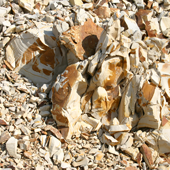
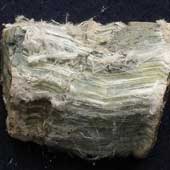
Basically you won't find asbestos in diatom mines, nor diatom in asbestos mines - so raw diatom material cannot contain asbestos. Since diatom products are never 100% diatom and always have other ingredients, if a diatom product contained asbestos, the most likely source would be recycled building waste in the non-diatom components.
Our products are all made in Japan by traditional manufacturers with strict production and materials control - no asbestos or harmful substances. Use with confidence.
Latex paint and diatom/shikkui mean different things by "anti-mold".
Latex paint anti-mold means the paint itself won't mold. Diatom and shikkui anti-mold means not only the material won't mold, but also reduces mold risk for other items in the room.
Latex paint uses fungicides for anti-mold, which don't last - typically months to 2 years. Diatom and shikkui use inherent humidity regulation for anti-mold - the function lasts indefinitely.
Mold exists in the air and multiplies rapidly when conditions allow - moisture and food. If walls and ceilings have dust, in very humid weather this dust absorbs moisture and becomes food for mold. So even with diatom/shikkui, we recommend regular cleaning at least annually - more in dusty areas.
Our products can all be wiped with a damp cloth for easy cleaning. Details...
Diatom prevents mold via humidity regulation - keeping the room and walls dry so mold lacks moisture to grow.
Shikkui adds high alkalinity that inhibits mold growth.
Which model suits you depends on your location and lifestyle. For anti-mold: if you rarely use AC, prefer open windows, or travel often with long absences, consider shikkui models. For humid areas or limited application area, choose Wakkanai diatom models.
Hong Kong is rainy - indoor drying is often necessary.
Even with a balcony, on rainy or unstable days without a dryer, clothes dry indoors. If no one is home and AC/dehumidifier isn't running, humidity rises fast and mold grows quickly. Mold that has grown won't disappear when you turn on AC or dehumidifier later. Indoor drying can severely affect air quality. More on indoor drying health risks...
Diatom and shikkui humidity regulation slows humidity rise when you're away without AC/dehumidifier, preventing mold growth.
Many people don't run AC or dehumidifier when away. During spring humidity or indoor drying, prolonged absence (travel, work) means very high humidity - ideal for rapid mold growth. More on indoor drying health risks...
Diatom and shikkui humidity regulation slows humidity rise when you're away without AC/dehumidifier.
For smooth coating, most painters can do it - they're used to plastering. Note some models dry very fast; in hot or very dry weather, more manpower may be needed.
Roller models are easier - even DIY possible.
For feature walls, best to find experienced contractors.
All products can be drilled and nailed - no problem.
Products themselves won't crack, but underlying wall cracks may show through.
All products meet strict Japanese standards - long-term durability, no powdering. If the contractor sanded, surface powder may remain - simply clean with dust brush and damp cloth.